Damp foundation walls, seepage that returns after heavy rain, and moisture pushing toward the lower level are signs that water is working against the foundation instead of draining away from it. When water presses against foundation walls, it looks for cracks, joints, and weak points to move through.

Chesapeake Solid Foundation Repair helps homeowners protect the foundation from water by addressing where moisture enters and how water builds up around the structure. For Chesapeake homes, that usually means combining wall repair, drainage, and moisture control so the foundation stays dry rather than treating one damp spot at a time.


Signs to watch

Foundation moisture problems tend to leave signs before they turn serious. Catching them early makes it easier to protect the walls, the crawl space, and anything stored below.

  • White residue on concrete: Efflorescence shows that water has moved through the foundation wall and left mineral deposits behind.
  • Damp or stained walls: Discoloration and moisture on foundation walls point to water pressing in from outside.
  • Musty odor: A persistent smell usually means moisture is collecting where airflow cannot clear it.
  • Recurring seepage: Water that returns after rain shows an active path through the wall or joints.
  • Cracks with moisture: Damp or leaking cracks often mark where water pressure is finding a way through.

If more than one of these appears, the foundation is likely dealing with an active water path, not just surface humidity.


Where water enters

Foundation seepage rarely comes from a single obvious opening. Water can move through cracks, joints, and weak points that are hard to spot without a careful look.

Wall cracks

Hairline cracks can wick moisture, while wider cracks may leak during wet conditions. Sealing them is often handled alongside foundation crack repair so the wall and the water path are both addressed.

Wall and floor joints

The seam where the foundation wall meets the floor is a common entry point. As water builds around the perimeter, that joint can turn into a path for seepage.

Drainage pressure

When water collects around the outside of the home, pressure builds against the foundation and pushes moisture inward. That is why foundation waterproofing usually has to address drainage, not just the interior stain.


Our inspection process

Chesapeake Solid Foundation Repair starts with a detailed look at the foundation, the visible moisture, and the likely source of intrusion. The goal is to understand how water is moving before recommending a repair.

  1. Listen to the symptoms: We ask where you have seen water, when it appears, and what has changed over time.
  2. Check the structure: We look for cracks, joint separation, staining, and signs of earlier patch work.
  3. Review moisture patterns: We note where the dampness starts, how high it climbs, and whether it changes after rain.
  4. Explain the findings: We describe what is happening in clear terms so you understand the source before any repair is discussed.

That approach helps avoid short-term fixes that hide the moisture without stopping the water path.


Waterproofing solutions

Foundation waterproofing is not one single product. The right solution depends on where water enters and how it builds up around the home.

  • Crack and seepage repair: For water entering through cracks or joints, targeted crack repair can reduce intrusion at the source.
  • Exterior drainage: When water collects around the foundation, a French drain can carry it away and relieve pressure.
  • Sump pump installation & repair: Where water needs to be removed, a sump pump can manage the accumulation.
  • Basement waterproofing: For water spreading across a lower level, a broader basement waterproofing plan can help manage it.

We do not treat every damp foundation the same way. A small recurring leak needs a different answer than water entering across a larger area.


Why Chesapeake homes struggle

Homes across Chesapeake face conditions that make foundation moisture a real concern. Coastal ground, a high water table, clay-heavy soil, and year-round humidity can make foundation and crawl space moisture harder to control than many homeowners expect.

Even without major flooding, slow seepage can lead to recurring dampness and long-term wear on the foundation. Water intrusion can stain walls, weaken finishes, and create conditions that are hard to ignore once they become routine.


Repair steps

Once the source is clear, we outline the next steps so you know what the work is meant to do. The plan may include one solution or a combination, depending on the foundation conditions.

  1. Stop the entry point: We address the crack, seam, or weak spot letting moisture through.
  2. Manage collected water: If water is building up, drainage or sump pump work may be part of the plan.
  3. Reduce future seepage: The goal is to limit repeat moisture so the foundation stays dry and stable.
  4. Confirm the result: We review the repaired area and explain what to watch for afterward.

Chesapeake Solid Foundation Repair keeps the process straightforward so you know what is being fixed and why it matters.


When to act

Waiting too long often lets a foundation moisture problem spread. A small damp patch can lead to wider staining, persistent odor, and damage that becomes harder to reverse.

It is a good time to schedule an inspection if you notice:

  • Water or seepage after rain, even if it dries later
  • Fresh cracks or cracks that seem wider
  • Repeated damp spots in the same place
  • Musty odor that returns after cleaning
  • Moisture around the base of the foundation wall

These signs usually mean the foundation is reacting to a real water path, not just ordinary humidity.


Common questions

What causes foundation water seepage?

Seepage usually comes from cracks, joints, or pressure from water building up around the foundation. A careful inspection helps identify the path.

Is foundation waterproofing the same as basement waterproofing?

They overlap. Foundation waterproofing focuses on protecting the foundation walls and controlling water around the structure, which often supports basement and crawl space moisture control.

Do small damp spots matter?

Yes. Small damp areas often show where water is first entering, and they can spread over time if the source is not addressed.

Will waterproofing fix cracks too?

Cracks are often repaired as part of the plan, since sealing them and controlling water pressure work together to keep the foundation dry.

Does drainage really matter?

Often yes. When water collects around the foundation, relieving that pressure with drainage is a key part of keeping moisture out.

Will one repair solve everything?

No single repair fits every home. The right solution depends on how water is entering and what the foundation shows during inspection.


Talk with our local crew

If your foundation shows recurring dampness, seepage, or water stains, Chesapeake Solid Foundation Repair can inspect it and explain what is happening. A foundation inspection helps confirm whether the moisture has started to affect the structure.

Call +17579086395 to schedule an inspection.

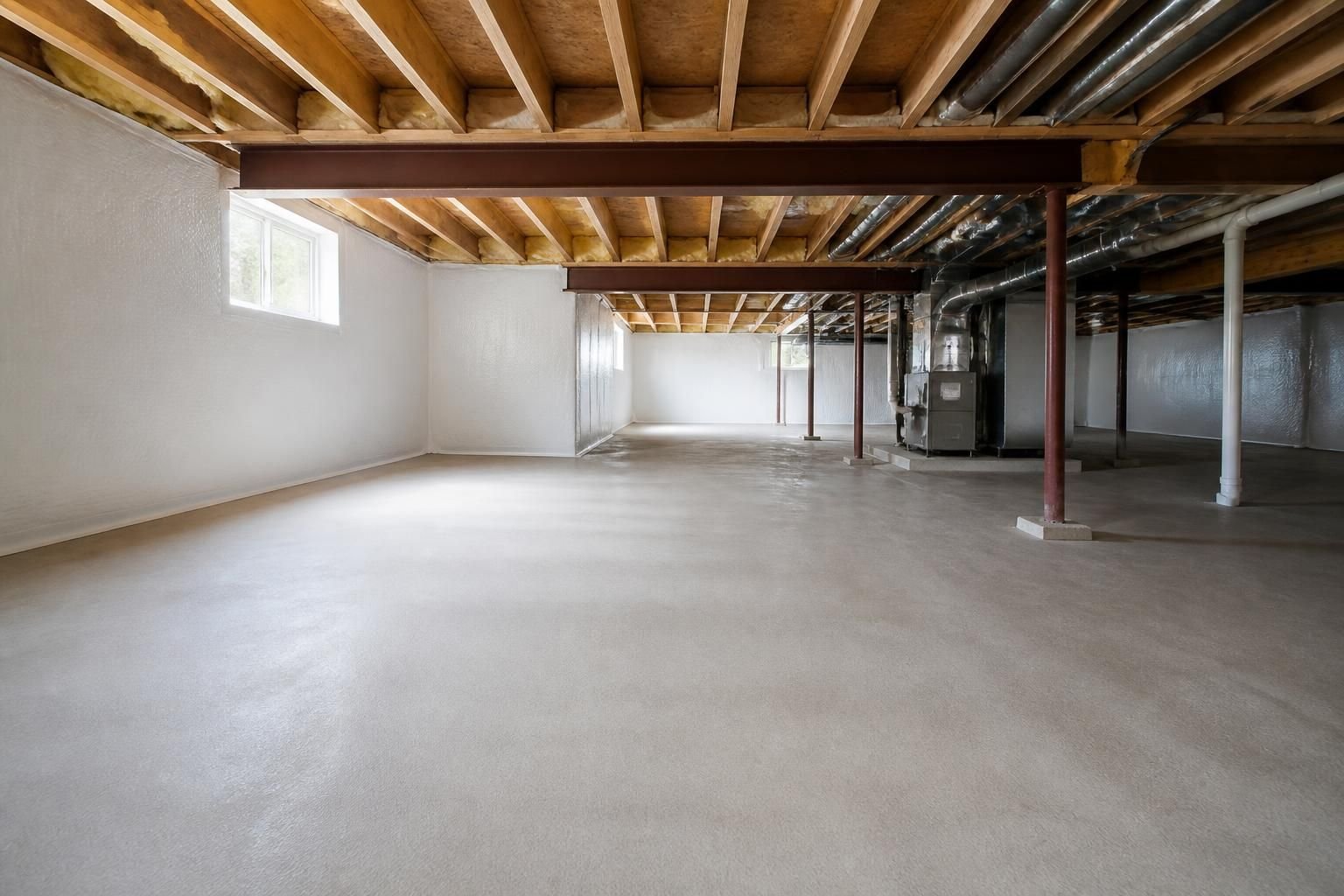
Dry finished basement with waterproofing and open space for text.

Get Started

Find the Cause of the Problem

Share what you are seeing in your home, and we will help identify whether the issue is coming from settlement, moisture, drainage, or crawl space damage.