
Chesapeake Solid Foundation Repair serves Deep Creek, a historic community in Chesapeake, Virginia. We help homeowners with wet crawl spaces, cracked walls, and floors that sag. Call us for a free first inspection.
Deep Creek was once its own small town. It became part of Chesapeake in 1963. It now feels like a suburb, but it keeps some of its rural look.
Deep Creek began as a small settlement on the edge of the Great Dismal Swamp. In the 1700s and 1800s it was a busy stagecoach stop on the road between Norfolk and Elizabeth City, North Carolina. It was also the main shipping point for swamp lumber.
A swamp edge means wet ground. Even after the land was drained for homes, the soil here holds water. That water affects crawl spaces, footings, and yards.
The northern section of the Dismal Swamp Canal meets the Southern Branch of the Elizabeth River at Deep Creek. The canal is on the National Register of Historic Places and is a National Historic Civil Engineering Landmark. It is also recognized as part of the Underground Railroad.
Water is part of the area's identity. Homes near canals and ditches often see a high water table. We check how close water is to your lot and how your yard drains.
Deep Creek sits along the original route of U.S. Highway 17, now U.S. Route 17 Business. Modern roads have bypassed much of it, so many older streets remain. Homes here range from old farmhouses to newer subdivisions.
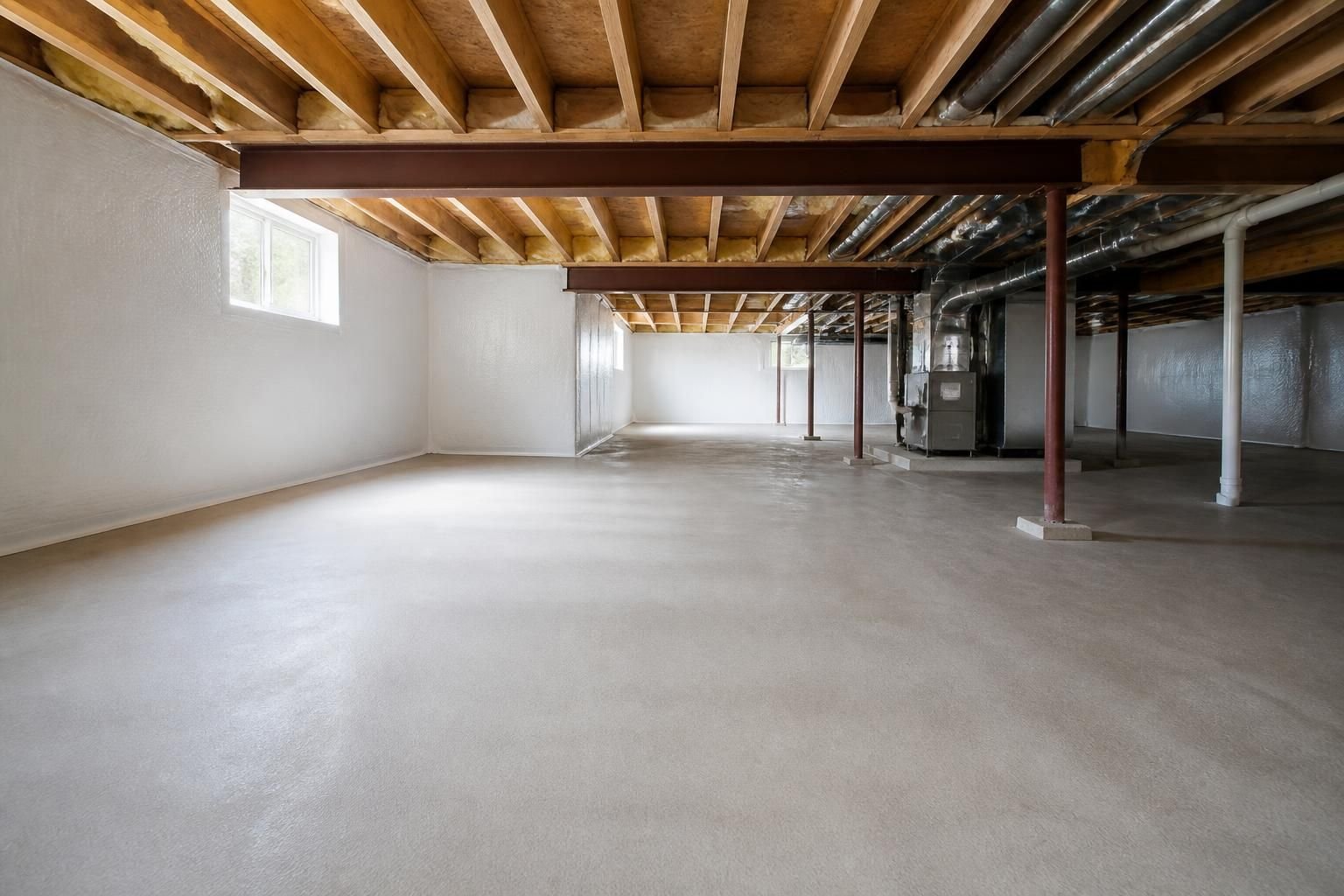
Older houses may have brick piers, wood beams, and crawl space vents. Over time, wet soil can tilt piers or rot the wood on top. We look closely at these parts.
A damp crawl space does more than harm wood. Air from the crawl space flows into the home, carrying moisture and musty smells. Allergies can feel worse when mold grows below.
We can remove moisture, treat mold, and seal the space to keep it dry. We start with a plain look at what you have.
Some Deep Creek lots stay soft for days after a storm. Water pools where the grade is low or where a ditch has filled in. A French drain or a graded swale can carry water to a safer spot.
We check downspouts, gutters, and ditches. Often a small change makes a big difference.
Doors that stick in damp weather, a musty smell, and floors that feel soft are common signs. So are cracks in brick or in block foundation walls.
Take a photo and note the date. If a crack grows, call us.
Because Deep Creek keeps a quieter, more rural feel, owners sometimes go years without looking under the house. Problems grow in the dark. A small leak or a damp spot can spread.
A check every few years is a good habit. If you have never looked, let us do it for you.
Here is what our crew is usually asked to fix nearby.
Wet ground raises the risk of crawl space moisture and soft soil. We check your lot to see how much.
Often yes. We inspect the structure and explain what is possible.
Drainage work can help. We look at grade, ditches, and downspouts.
Look at least once a year, and after major storms. If you cannot, we can do it for you.
Ready to check your Deep Creek home? Call Chesapeake Solid Foundation Repair at +1-757-908-6395 for a free inspection.
Get Started
Share what you are seeing in your home, and we will help identify whether the issue is coming from settlement, moisture, drainage, or crawl space damage.