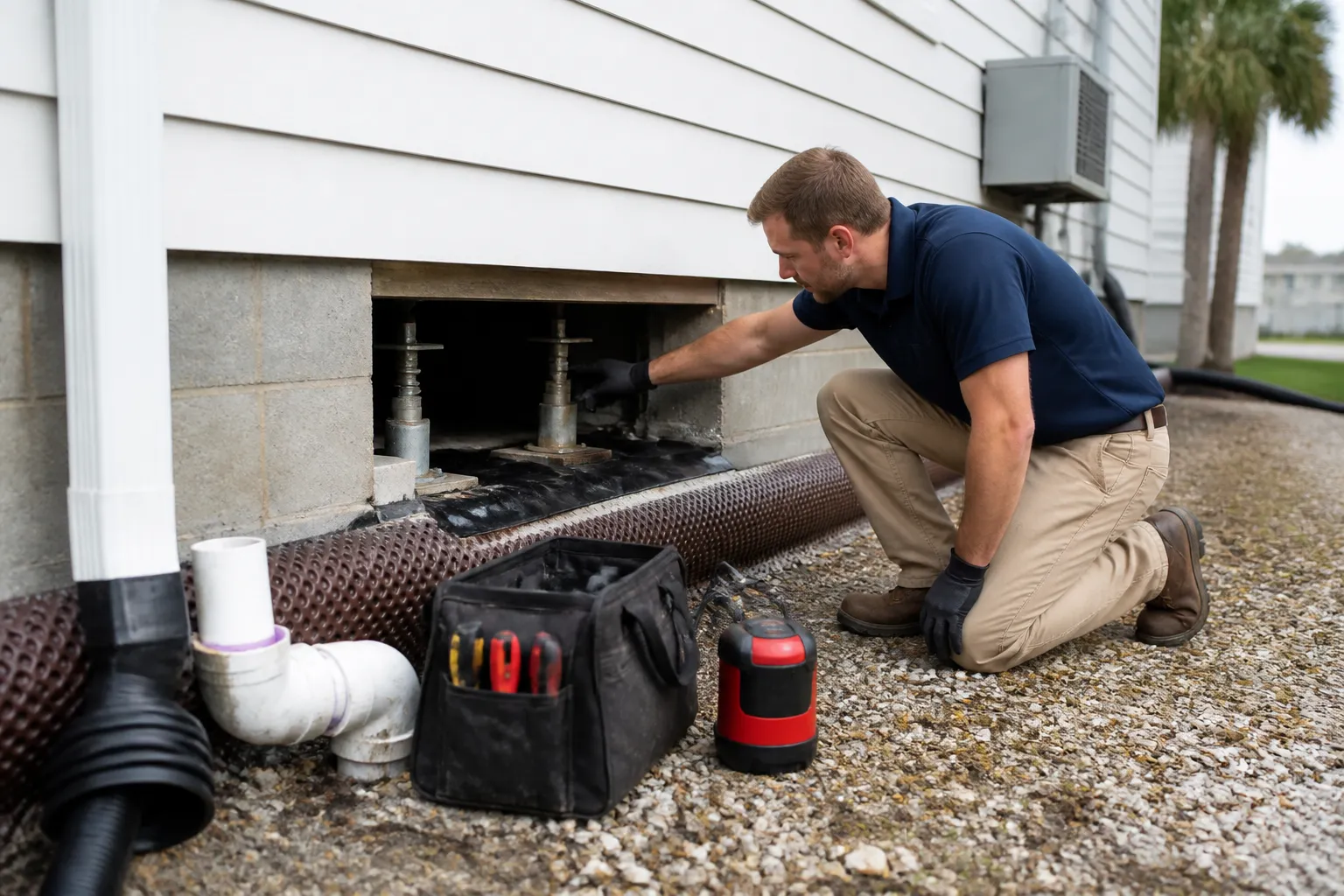
Chesapeake Solid Foundation Repair offers commercial foundation repair in Chesapeake, VA. Foundation problems in a commercial building can disrupt more than the structure. Uneven floors, cracks, sticking doors, moisture under the building, or shifting slabs can affect tenants, employees, customers, equipment, and day to day operations. When those signs show up, the right next step is a careful inspection that looks beyond the surface damage.
Chesapeake Solid Foundation Repair helps commercial property owners, managers, and local businesses understand what is happening under and around the building. Coastal Virginia soils, high humidity, drainage issues, and a high water table can all contribute to settlement, crawl space deterioration, and moisture related structural movement. We focus on identifying the source of the problem so the repair plan addresses the cause, not just the visible symptom.
Commercial buildings can place different demands on a foundation than a typical home. Wider floor spans, heavier loads, larger slabs, tenant buildouts, and repeated foot traffic all make accurate diagnosis important. A small crack may be cosmetic, or it may be a sign of settlement, water intrusion, poor drainage, or failing support members below the structure.
We inspect the affected areas, review visible symptoms, and explain what we find in plain terms. The goal is to give property decision makers clear information before work begins. Depending on the building and the problem, repair may involve crack repair, structural support, drainage correction, crawl space work, floor stabilization, moisture control, or slab related repairs.
Foundation issues often develop gradually. Commercial spaces may also hide early symptoms behind flooring, finishes, shelving, or tenant improvements, so it helps to take changes seriously when they appear.
Chesapeake properties sit in a coastal environment where soil and moisture conditions can change throughout the year. Low lying ground, poor drainage, heavy rain, humidity, and a high water table can all add stress to foundations, slabs, and crawl space framing.
When soils shift, soften, wash out, or compress, the foundation can move with them. Some areas may settle more than others, creating cracks, uneven floors, and stress around openings. Settlement can also be worse near drainage problems, poorly compacted fill, or areas where water repeatedly collects.
Many local commercial and mixed use buildings have crawl space sections, raised floors, or low areas where moisture can collect. Long term dampness can affect wood framing, supports, insulation, and indoor air quality. If the moisture source remains active, repairs that only address the surface may not last.
Water around a foundation can create movement, erosion, and pressure against building materials. Downspout discharge, grading issues, clogged drainage paths, or poor site runoff can all contribute to repeated foundation stress.
Every building is different, so the repair plan depends on the structure, the damage pattern, and the conditions around the foundation. Chesapeake Solid Foundation Repair works across the foundation and crawl space issues common to local properties.
A commercial foundation project often has more moving parts than a residential repair. Access, tenant schedules, inventory, equipment, parking, customer traffic, and building operations may all need to be considered. We keep the discussion practical so you know what areas need attention and what the work may involve.
Before work begins, it is helpful to gather information about when symptoms first appeared, whether cracks are growing, where water collects after rain, and which parts of the building feel different than they used to. Photos, maintenance notes, and tenant observations can also help during the inspection.
Commercial foundation concerns can show up in many types of buildings throughout Chesapeake and nearby communities. We can inspect foundation, crawl space, slab, and moisture problems for a range of local property types.
If you are not sure whether the issue is structural, moisture related, or mostly cosmetic, an inspection can help separate urgent concerns from items that simply need monitoring.
Crack width, direction, location, movement, moisture, and nearby symptoms all matter. A crack that is growing, stair stepping, leaking, or paired with uneven floors should be inspected to determine the cause.
Yes. When the structure shifts, doors may rub or latch poorly, trim may separate, and interior finishes may crack. These symptoms can appear away from the original foundation movement.
It can. Long term humidity and standing water can contribute to wood rot, mold growth, weakened supports, and floor movement. Moisture control is often part of a lasting repair plan.
Yes. Drainage is an important part of many foundation problems in Chesapeake. We look for signs of poor grading, water collection, runoff patterns, and conditions that may keep the soil or crawl space too wet.
Sometimes. The right approach depends on the severity of the movement, safety concerns, access, and whether moisture or drainage issues need to be corrected first.
Make note of the problem areas, collect photos if you have them, and identify any rooms, tenant spaces, crawl space entries, or exterior areas where symptoms are visible. This helps make the inspection more focused.
If your commercial building has cracks, uneven floors, crawl space moisture, slab movement, or signs of settlement, it is worth finding out what is causing the problem. A clear inspection can help you make a confident decision before the damage spreads or repairs become more complicated.
Contact Chesapeake Solid Foundation Repair to schedule a commercial foundation repair inspection in Chesapeake, VA. We will evaluate the issue, explain the findings, and recommend a repair plan based on the building and the conditions affecting it.
Commercial buildings in Chesapeake face the full range of local challenges — a high water table, soft soils near tidal waterways and the Dismal Swamp, and the fastest relative sea-level rise on the East Coast. On a large footprint those forces settle one area while another stays put. Our commercial work starts with a level survey across the whole structure and pairs structural support with the drainage and moisture control this coastal setting demands.
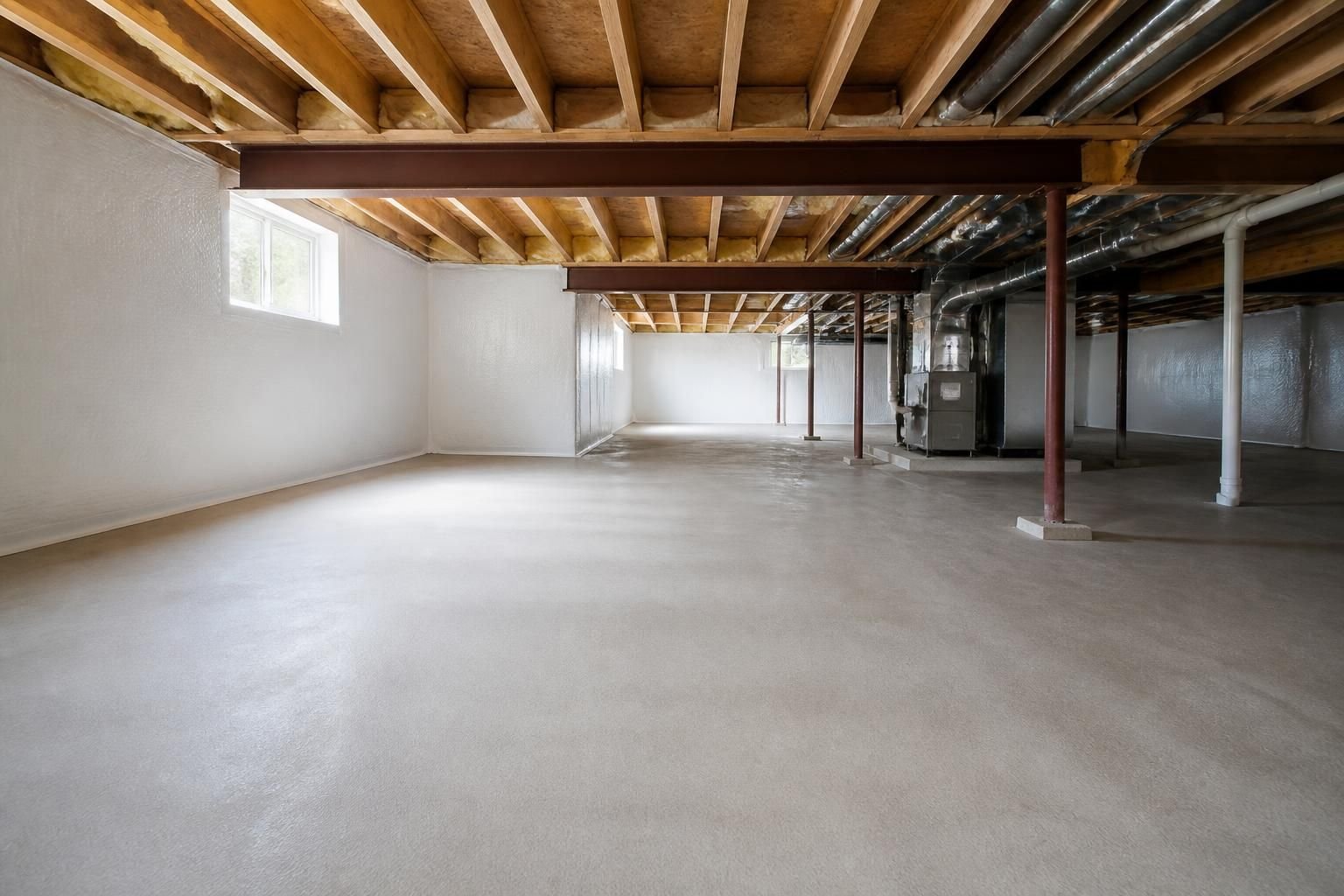
Get Started
Share what you are seeing in your home, and we will help identify whether the issue is coming from settlement, moisture, drainage, or crawl space damage.