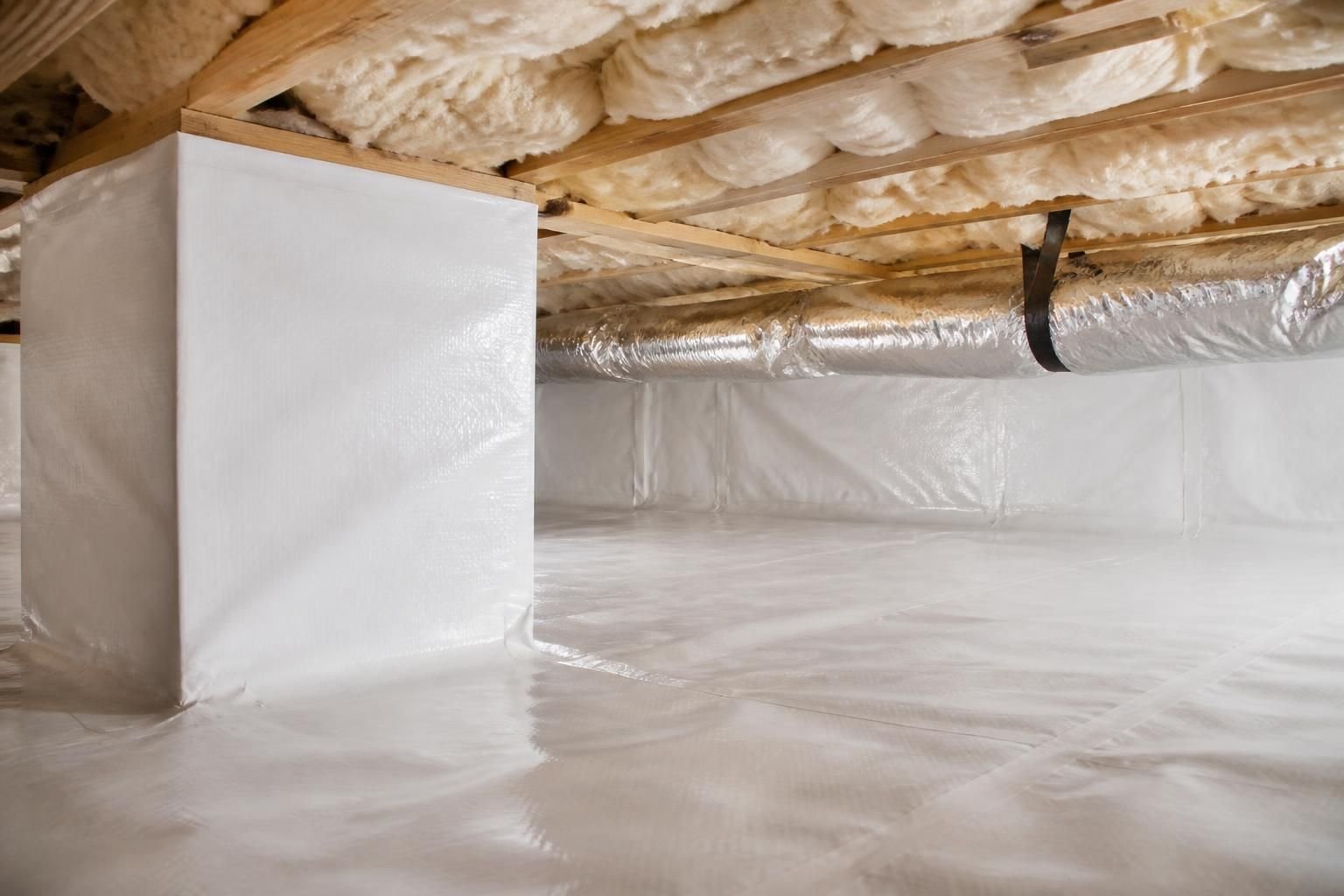
Chesapeake Solid Foundation Repair offers crawl space vapor barrier & insulation in Chesapeake, VA. If your floors feel cold, your crawl space smells musty, or you keep finding damp insulation under the house, the problem is not going away on its own. Moisture moves fast through a crawl space, and once it settles into wood, insulation, and soil, it can lead to sagging floors, mold growth, and damage that spreads quietly.
For homeowners in Chesapeake, a crawl space vapor barrier and insulation upgrade is often the difference between a damp, unhealthy underfloor area and a cleaner, drier space that supports the home above it. Chesapeake Solid Foundation Repair helps identify where moisture is entering, what materials have already been affected, and what needs to be sealed, replaced, or improved so the crawl space stops working against the house.
A crawl space does not need standing water to cause trouble. Many Chesapeake homes show the warning signs long before the damage looks serious from the living space above. When insulation hangs down, wood feels damp, or the air inside the home has a persistent earthy odor, the crawl space is often part of the story.
If you notice one or more of these signs, it is worth having the crawl space inspected before the damage spreads. Chesapeake Solid Foundation Repair looks at the full space, not just the visible symptoms, so the recommendation fits the real condition under your home.
A vapor barrier is more than a sheet of plastic laid across the ground. In a crawl space, it helps reduce moisture rising from soil and entering the air under the home. That matters because humid air and damp soil can feed mold, rot, and insulation failure even when no plumbing leak is present.
In Chesapeake, soil moisture and humidity can create a crawl space environment that stays damp for long stretches. A barrier helps block that upward movement of moisture so the crawl space does not constantly refill with humidity from below.
When the crawl space holds less moisture, there is less chance for musty odor and less chance that contaminated air will move upward into the home. Many homeowners notice a difference in comfort after the space is sealed and insulated the right way.
A vapor barrier is often part of a larger crawl space repair plan. It pairs well with drainage, sump pump installation and repair, crawl space moisture removal, and insulation work because each part helps reduce the conditions that let damage keep coming back.
Insulation in a crawl space fails for simple reasons. It gets wet, falls away from the framing, traps dirt, or becomes a place where moisture sits instead of escaping. Once that happens, the insulation is no longer helping the home keep a stable temperature.
Homeowners often ask why the floors above the crawl space feel colder or why the house seems harder to keep comfortable. In many cases, the answer is damaged or misplaced insulation underneath. Replacing that material only makes sense when the moisture source has been addressed first.
We evaluate whether the crawl space insulation should be replaced, supplemented, or paired with a vapor barrier so the new work has a solid base to last.
Chesapeake Solid Foundation Repair starts with a crawl space inspection that looks at moisture, insulation condition, air movement, and visible structural concerns. That inspection helps separate a small insulation problem from a broader crawl space repair need.
We look for damp soil, standing water, staining, insulation failure, wood damage, and signs of moisture intrusion. If there is mold growth, drainage trouble, or evidence of sagging floors, we note that as part of the overall picture.
After the inspection, we explain what is causing the problem and what should happen next. For some homes, that means crawl space vapor barrier and insulation work alone. For others, the better answer includes crawl space water removal and drainage, crawl space mold & moisture removal, or sump pump installation and repair.
Our work is meant to do more than make the crawl space look cleaner. The goal is to reduce moisture entry, protect the structure above, and create a crawl space that supports the home instead of stressing it.
Every crawl space is different, but the same core methods come up often. The right combination depends on how much moisture is present, what shape the insulation is in, and whether the space has already taken structural damage.
When these pieces are matched to the actual condition of the crawl space, the result is a space that is easier to maintain and less likely to keep damaging the home from below.
Homes across Chesapeake face crawl space concerns more often than many homeowners expect. Low-lying coastal conditions, a high water table, and year-round humidity make underfloor moisture a common challenge. Because many local homes are built on crawl spaces or slabs rather than basements, the space beneath the house becomes a major part of the home’s overall comfort and durability.
That is why our work focuses heavily on crawl space repair, encapsulation, drainage, and moisture control alongside foundation and structural repairs. A crawl space vapor barrier and insulation upgrade can be a practical step for a home in Greenbrier, Great Bridge, Western Branch, Deep Creek, South Norfolk, Indian River, Hickory, Grassfield, Pleasant Grove, Butts Station, Edinburgh, or Camelot when the real issue is moisture coming up from below.
When you contact Chesapeake Solid Foundation Repair, the conversation starts with what you have noticed. Musty odors, cold floors, insulation hanging down, or moisture under the house are all useful clues. We use that information to guide the inspection and narrow down the source of the problem.
From there, we explain the condition of the crawl space in plain terms. If the fix is straightforward, we say so. If the crawl space needs a broader repair plan, we lay out the steps so you can make a clear decision without guessing what comes next. The aim is to solve the underlying moisture problem, not just cover up its signs.
In Hampton Roads' humid climate, ground moisture rising through a crawl space condenses on framing and insulation, driving rot and mold. A proper vapor barrier and appropriate insulation cut that moisture path — an especially important step here given the high water table and long humid season. We install vapor barriers and insulation as part of a moisture strategy, not in isolation, so the crawl space stays dry and efficient.
Signs include persistent musty odors, damp soil, visible condensation, torn or shifting plastic, and insulation that stays wet or dirty. A crawl space inspection can confirm whether the barrier is still doing its job.
Not if moisture is still entering the area. Replacing insulation without controlling vapor and humidity usually leads to the same failure again. The moisture source should be addressed first.
Yes, it can still reduce ground moisture and improve conditions under the home. In some cases, it is part of a larger encapsulation or drainage plan, depending on what the crawl space needs.
Wet insulation can lose effectiveness, hang loose, and contribute to moldy or stale conditions. It may also hide other damage to the framing and subfloor.
It can help when sagging floors are being affected by moisture-damaged insulation, wood, or crawl space conditions. If structural support has already been compromised, additional floor repair or structural foundation repair may be needed.
Sometimes. Drainage, water removal, mold and moisture removal, insulation replacement, or sump pump installation and repair may be needed alongside the vapor barrier to address the full problem.
If your crawl space smells damp, feels unfinished, or keeps feeding comfort problems above the floor, it is time to take a closer look. Chesapeake Solid Foundation Repair can inspect the space, explain what is causing the moisture, and recommend crawl space vapor barrier and insulation work that fits your home.
For homeowners across Chesapeake, the right repair under the house can make a real difference upstairs. Contact us to schedule a free inspection and get a clear, no-pressure assessment of your crawl space.
Get Started
Share what you are seeing in your home, and we will help identify whether the issue is coming from settlement, moisture, drainage, or crawl space damage.