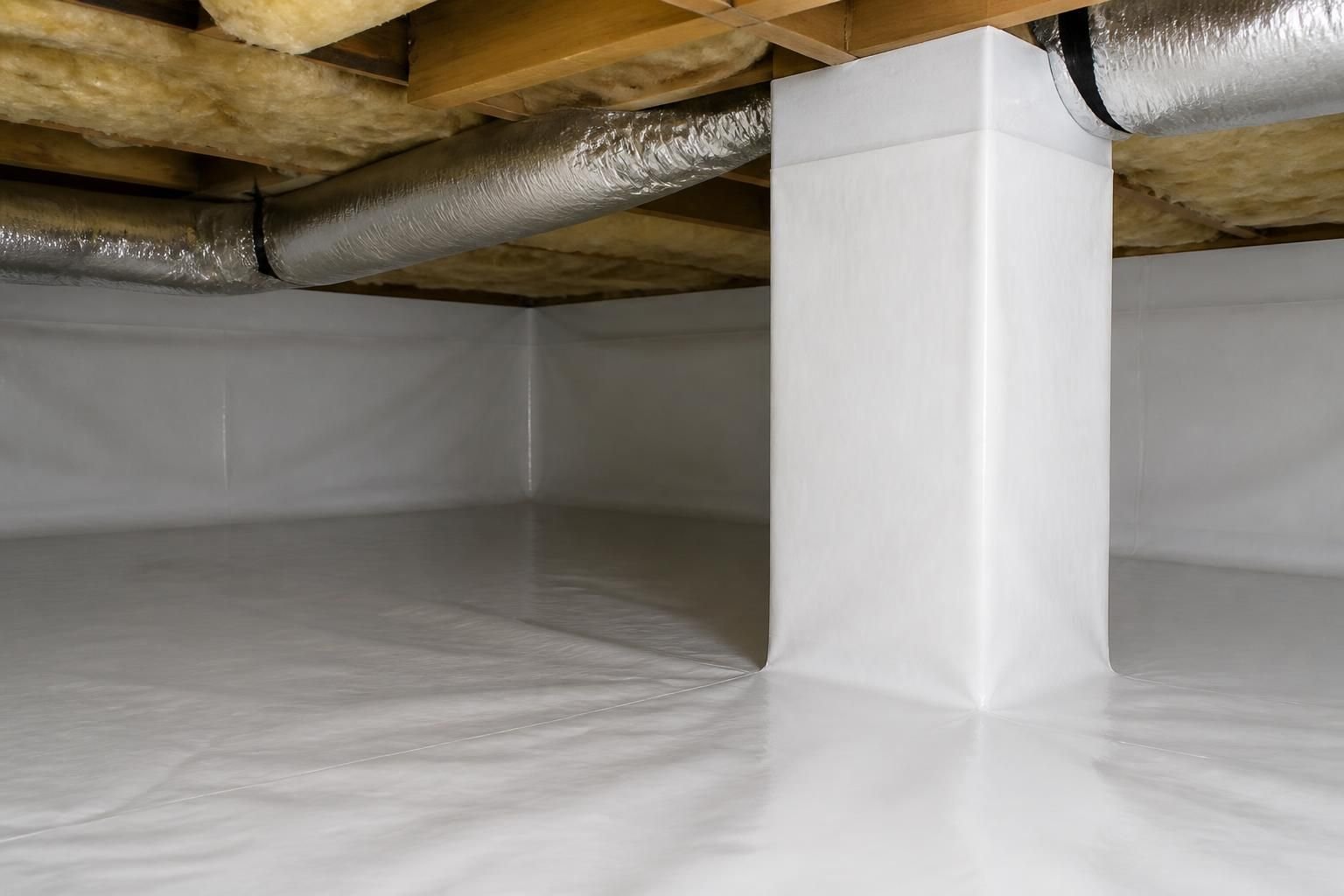
Chesapeake Solid Foundation Repair offers crawl space encapsulation in Chesapeake, VA. If your floors feel soft, your home smells musty, or you keep seeing moisture under the house, the crawl space may be the source. In Chesapeake, a damp crawl space can lead to mold growth, wood rot, sagging floors, and damage that keeps spreading if the space stays open to outside air and ground moisture.
Chesapeake Solid Foundation Repair helps homeowners seal and control those conditions with crawl space encapsulation. We inspect the crawl space, find where water and humidity are entering, and build a plan that targets the cause rather than just covering the symptoms.
Crawl space encapsulation turns a damp, open underside of the home into a sealed, controlled space. The goal is simple: block ground moisture, reduce humid air movement, and create a cleaner environment under the house.
For many Chesapeake homes, that change makes a noticeable difference. When the crawl space stays wet, the damage does not stop at the soil line. It can move into floor framing, insulation, and the living space above. Encapsulation helps protect those areas by separating the home from the moisture below it.
Encapsulation is not just about appearance. It is about creating a drier, more stable environment under the home so the structure above it is less exposed to moisture-related damage.
Many homeowners notice crawl space trouble long before they look underneath. A few warning signs point to moisture, air leakage, or structural stress below the house.
If the smell is stronger near certain rooms or floors, moisture under the house may be part of the problem.
Soft spots, sloping floors, or bounce can happen when floor framing has been weakened by moisture or support problems.
Water on pipes, framing, or insulation often means the crawl space is staying too humid.
Water that remains after rain or wet weather can keep the crawl space from drying out.
Darkened wood, streaking, or visible growth can signal long-term moisture exposure.
When the structure shifts or floor framing weakens, door and floor changes can follow.
If one or more of these signs are present, it is worth getting the crawl space looked at before the damage spreads further.
Chesapeake Solid Foundation Repair starts with a crawl space inspection that focuses on the source of the moisture and the condition of the structure. We look at the full picture, not just the visible spots that appear wet.
After the inspection, we explain what we found in plain terms. If the crawl space needs encapsulation, we outline the steps that make sense for the home rather than pushing a one-size-fits-all approach.
The work varies by home, but a strong encapsulation plan usually follows a clear sequence. That sequence matters because sealing a crawl space without addressing water entry can leave the problem unresolved.
We identify where water and humidity are entering, including soil moisture, seepage, or poor crawl space conditions.
If the crawl space holds water, drainage or sump pump work may be needed before sealing begins.
A durable vapor barrier is placed to reduce moisture moving up from the ground and into the space.
Gaps, vents, and problem areas are closed to limit humid outdoor air from entering.
Depending on conditions, insulation, air sealing, or additional support work may be included.
This process is designed to create a crawl space that is easier to maintain and less likely to keep feeding moisture problems into the rest of the home.
Not every crawl space needs the same solution. Some spaces need stronger drainage support. Others need a better barrier and more complete sealing. The right plan depends on what the inspection shows.
If water is pooling under the house or coming back after rain, a barrier alone will not solve the problem. Drainage support and sump pump installation or repair may be part of the crawl space plan.
Damaged or poorly placed insulation can hold moisture, fall away, or stop helping the home as intended. Vapor barrier and insulation work often go together when the crawl space has been exposed for a long time.
If moisture has already led to mold or heavy staining, the crawl space may need mold and moisture removal before encapsulation can do its job. Sealing over an active moisture problem is not enough.
Chesapeake homes face crawl space conditions that can be hard on a structure over time. Many local houses are built on crawl spaces or slabs, and the area under the home often sees high humidity, trapped moisture, and shifting soils. That combination can lead to floor movement, odors, and long-term damage if left alone.
Crawl space encapsulation is especially valuable when a home has recurring dampness, water intrusion, or signs that the structure is being affected by moisture. It is a practical way to reduce the amount of moisture the home has to fight every season.
For homeowners who want a more complete solution, Chesapeake Solid Foundation Repair can also coordinate related services such as crawl space repair, structural foundation repair, floor repair, foundation crack repair, basement waterproofing, and concrete lifting when those issues are part of the same problem.
Homeowners usually want to know what the process feels like from start to finish. The answer should be straightforward: the crawl space is inspected, the source of the problem is identified, and the solution is built around the actual conditions under the house.
We keep the next steps simple. If the crawl space needs cleaning, sealing, drainage support, or structural work, we explain why each piece matters. If the issue is limited, we keep the plan focused. If the moisture has already affected the flooring above, we address that too.
Chesapeake Solid Foundation Repair works to make the crawl space easier to live with by reducing the moisture that causes so many common home problems. The result should be a drier crawl space, better protected framing, and fewer surprises under the floor.
In Chesapeake's humid, high-water-table environment, an open crawl space acts like a sponge, pulling moisture into the home and feeding mold and wood rot. Encapsulation seals the crawl space off from that ground and air moisture, which matters even more here given the region's rising groundwater and tidal influence. We encapsulate with drainage and, where needed, a dehumidifier so the space stays dry year-round.
Signs like musty odors, standing water, visible condensation, mold, or sagging floors often point to a crawl space that needs attention.
Yes, when the odor is tied to crawl space moisture, sealing the space and reducing damp conditions can make a real difference.
It can help protect the framing from further moisture damage, but sagging floors may also need structural repair or floor support work.
Water removal and drainage may need to happen before encapsulation so the space is not sealed over an active water problem.
It can reduce the moisture that feeds mold, but existing mold and moisture damage should be addressed before or during the encapsulation plan.
It is most useful when a crawl space has moisture, humidity, odors, or air leakage problems. An inspection helps determine whether it is the right fit.
If your crawl space is damp, musty, or affecting the floors above it, do not wait for the damage to spread. A careful inspection can show whether encapsulation, drainage, support work, or a combination of services is needed.
Contact Chesapeake Solid Foundation Repair at +17579086395 or visit us at 555 Belaire Ave #210, Chesapeake, VA 23320. We work with homeowners across Chesapeake and nearby service areas to help solve crawl space moisture problems with clear recommendations and solid repair work.
Get Started
Share what you are seeing in your home, and we will help identify whether the issue is coming from settlement, moisture, drainage, or crawl space damage.