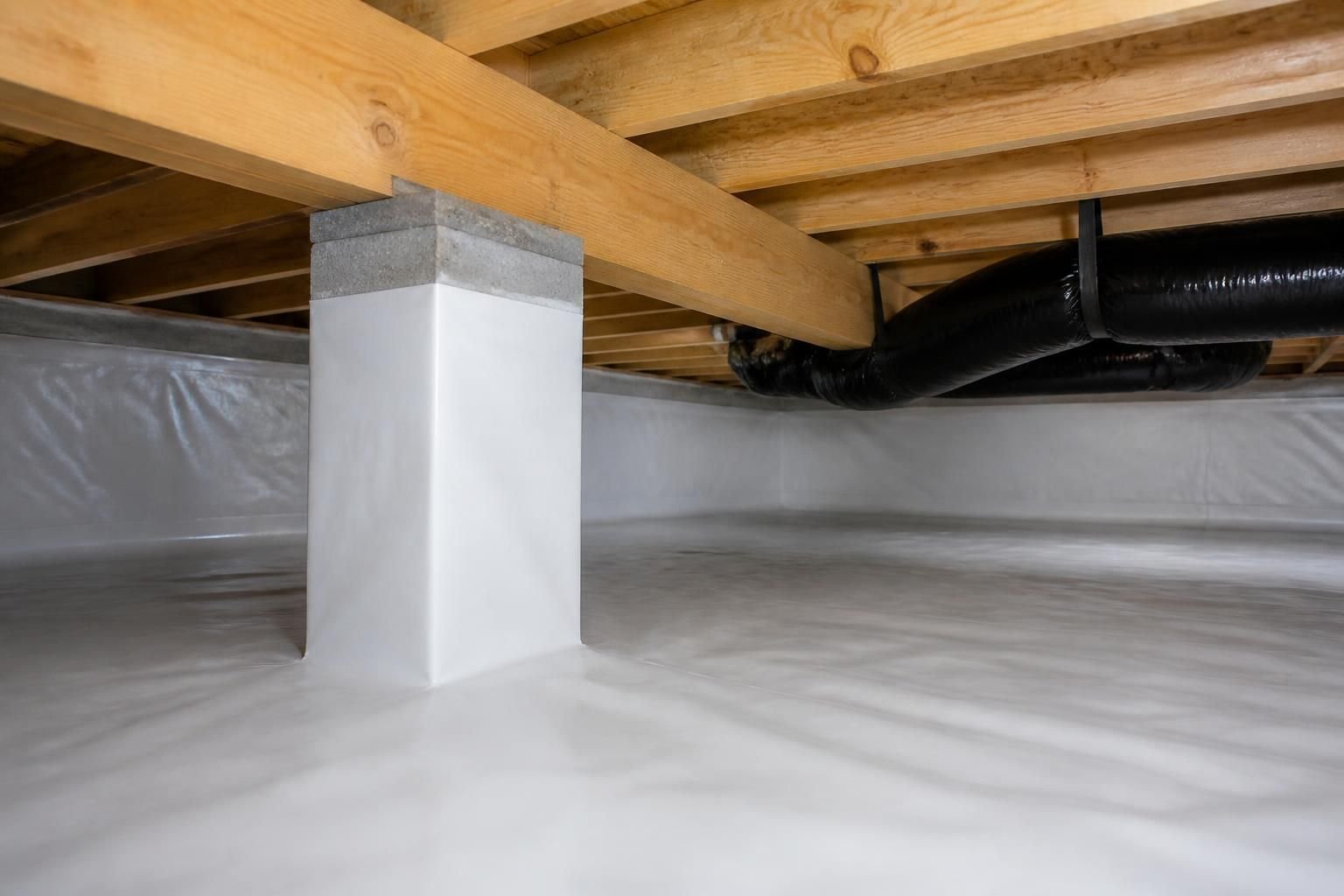
Chesapeake Solid Foundation Repair offers crawl space mold & moisture removal in Chesapeake, VA. Musty odors, damp insulation, and dark spots under the house are signs your crawl space needs attention. When moisture lingers below your floors, mold can spread fast, wood can soften, and the air inside your home can start to feel stale and heavy.
If you live with uneven floors, a persistent mildew smell, or visible growth on joists and framing, Chesapeake Solid Foundation Repair can inspect the crawl space and explain what is causing it. We look for the source of the moisture, remove the conditions feeding mold, and recommend the right repair path for your Chesapeake home.
Mold and moisture problems often start quietly. Homeowners usually notice the effects before they find the source. A crawl space can hold moisture long after a rain event, and that trapped dampness keeps feeding growth.
These warning signs matter because mold rarely shows up alone. It usually follows a drainage, humidity, or water intrusion problem that needs to be corrected at the source.
Chesapeake homes face conditions that can make crawl spaces vulnerable to mold and moisture. Low-lying ground, a high water table, and year-round humidity create an environment where water stays longer and dries slower. Many local homes also rely on crawl spaces, which means the area beneath the house can become a hidden moisture pocket.
When groundwater, surface water, or seepage enters the crawl space, it raises the moisture level and creates the kind of dampness mold prefers. Even small amounts of recurring water can keep the area wet enough for growth.
Warm, humid air can collect under the home and condense on cooler surfaces. That condensation may be enough to dampen framing, insulation, and soil, especially when ventilation and sealing are not addressing the full problem.
If water is not being directed away from the crawl space, it can pool around the foundation and work its way inside. Drainage concerns often go hand in hand with mold because the same water that enters also feeds moisture buildup.
Chesapeake Solid Foundation Repair starts with a detailed look at the crawl space so we can separate surface symptoms from the real cause. Mold removal alone does not solve a water problem, and moisture control without understanding the source can leave the issue coming back.
That process helps homeowners make a clear decision based on what the crawl space actually needs. It also helps avoid treating symptoms while the hidden moisture problem stays active.
Once we understand the moisture source, we focus on removing the conditions that support mold growth. The goal is not to mask the problem. The goal is to make the crawl space drier, cleaner, and less likely to keep feeding new growth.
Every home is different. Some spaces need a targeted cleanup, while others need a more complete moisture control plan. We tailor the repair path to the conditions we find.
When a crawl space keeps pulling in moisture, a more complete containment approach can help. Crawl space encapsulation is often a strong option for homes that need better control over humidity and damp soil exposure.
A vapor barrier helps separate the crawl space floor from the moisture that rises from the ground. That can reduce dampness and make it harder for mold to keep returning.
Encapsulation can limit the way outside humidity and ground moisture enter the space. By reducing airflow from damp sources and closing off exposed areas, the crawl space becomes easier to manage.
If water is collecting under the home, sealing alone is not enough. We may recommend drainage improvements or sump pump installation and repair to manage water that keeps showing up.
Mold and moisture are not just surface problems. They can affect the materials that hold up your home. If wood stays damp long enough, it can weaken and lead to floor movement above the crawl space.
That is why we look beyond the visible growth. We check for sagging floors, soft wood, and other signs that moisture has started affecting structure. When needed, we can recommend crawl space repair, floor repair, or structural foundation repair alongside moisture removal.
If floors feel uneven or bouncy, moisture may have damaged supports below. Fixing the crawl space conditions helps protect the home from further movement.
Wood rot can spread when moisture keeps returning. Catching it early helps limit larger repairs and reduces the chance of ongoing damage.
After the crawl space is cleaned up and the moisture source is addressed, homeowners often notice a few practical changes. The smell may improve, the air may feel less damp, and the crawl space itself becomes easier to keep under control.
These changes matter because crawl space conditions can influence comfort, air quality, and the condition of the structure above. A drier crawl space is easier to live with and easier to maintain.
Chesapeake's warm, humid climate and high water table make crawl-space mold and musty odors a chronic problem, especially in older homes near the Elizabeth River and low-lying areas. Mold here is a symptom of standing moisture that also threatens the wood structure. We remove the mold and, crucially, correct the water source — drainage, vapor barrier, and ventilation — so it does not simply return in the next wet season.
If the odor gets stronger near floor vents, closets, or low areas of the home, the crawl space may be involved. A musty smell below the house often travels upward through gaps and penetrations.
Yes, if the moisture problem remains. That is why we focus on the source first. Removing visible mold without controlling dampness can leave the same conditions in place.
No. Some spaces need targeted drainage or moisture removal, while others benefit from a full encapsulation plan. The right choice depends on what the inspection shows.
If moisture has affected floor supports, addressing the crawl space can be part of the solution. We also look for related floor repair or structural work when needed.
Standing water should be addressed quickly because it keeps the crawl space wet and encourages more mold growth. Drainage and water removal are often part of the repair plan.
Chesapeake’s low, wet coastal ground, high water table, and humidity make crawl spaces more likely to hold moisture. That is why local homes often need focused moisture control and crawl space repair.
If your crawl space smells musty, feels damp, or shows signs of mold, Chesapeake Solid Foundation Repair can take a close look and explain what is happening. We serve homeowners across Chesapeake and nearby areas such as Greenbrier, Great Bridge, Western Branch, Deep Creek, South Norfolk, Indian River, Hickory, Grassfield, Pleasant Grove, Butts Station, Edinburgh, and Camelot.
Call +17579086395 or visit us at 555 Belaire Ave #210, Chesapeake, VA 23320. We are open Monday through Sunday from 9:00 AM to 9:00 PM. If you are ready for a clear assessment of your crawl space, we are here to help.
Get Started
Share what you are seeing in your home, and we will help identify whether the issue is coming from settlement, moisture, drainage, or crawl space damage.