
Chesapeake Solid Foundation Repair serves Greenbrier, the busy shopping and residential area of Chesapeake, Virginia. We help homeowners and business owners with cracks, damp crawl spaces, and uneven floors. The first inspection is free.
Greenbrier has two sections, Greenbrier East and Greenbrier West. Greenbrier Parkway is the main commercial street, with shopping centers, offices, and a mall. Neighborhoods sit along streets such as Volvo Parkway and Battlefield Boulevard.
Greenbrier mixes homes with stores, offices, and call centers. Dollar Tree and QVC both have large operations here. Chesapeake City Park, home of the annual Jubilee, is also part of the area.
Lots of pavement means water runs off fast. Where does it go? Often it ends up beside a foundation. We check the grade, the gutters, and how water leaves the lot.
Chesapeake is low, flat, and close to water. About 48 inches of rain falls in a typical year. The Great Dismal Swamp and the Elizabeth River are part of the city.
In flat areas, water drains slowly. Soil stays wet, and the foundation feels the push. Basements and crawl spaces take the brunt.
Many Greenbrier offices and stores sit on large slabs. Cracks in a floor, gaps near overhead doors, or sagging parking lots are signs of settling. A damp floor slab can also hurt flooring and stored goods.
We inspect commercial buildings and write a clear summary for owners and managers.
Greenbrier has primary, intermediate, and middle schools. Students go on to Indian River High School or Oscar Smith High School. Families live on quiet streets and in newer subdivisions.
Whether your home is 10 years old or 40, the same question applies: where does the water go? A short check can answer it.
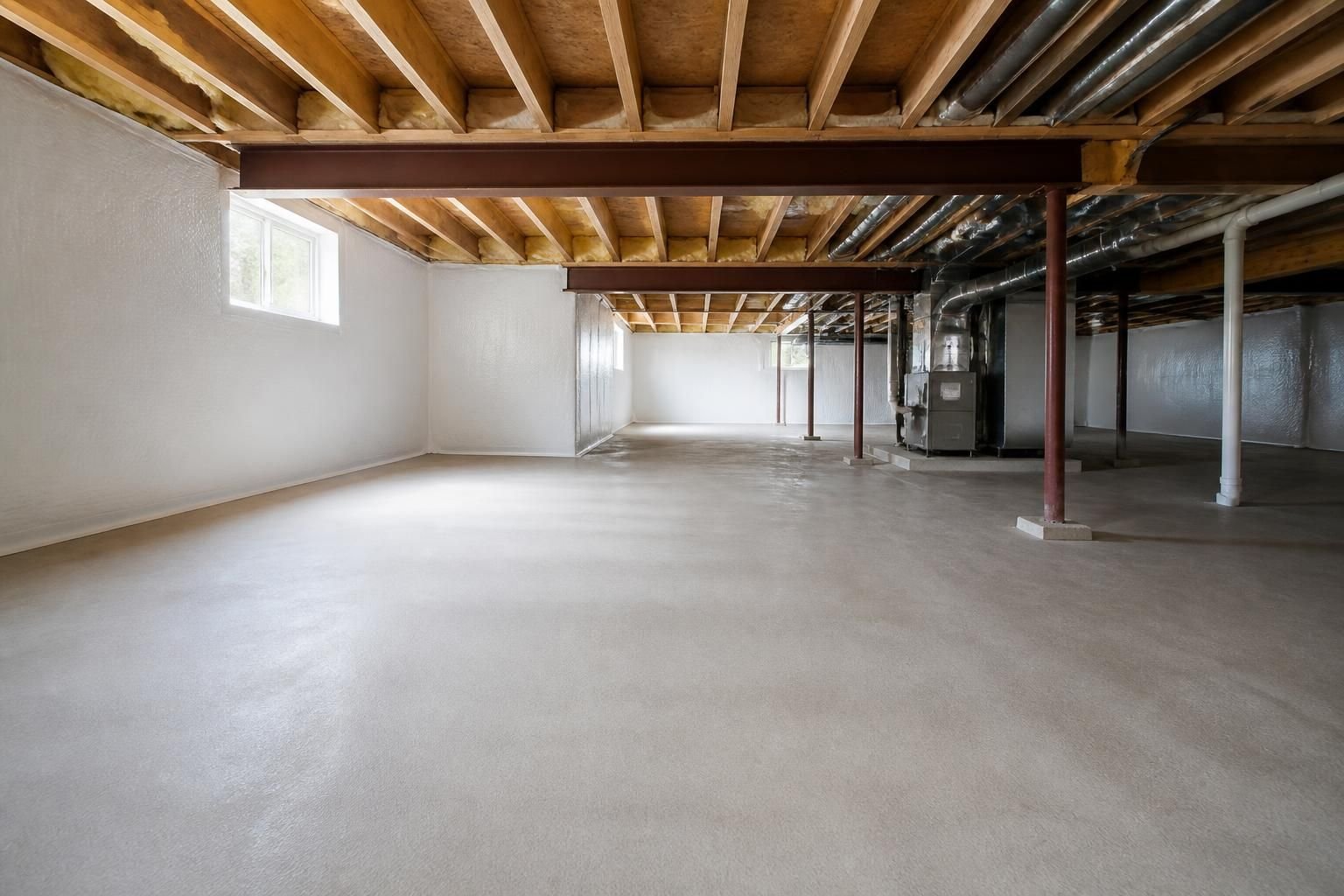
A sealed, dry crawl space protects floors and air quality. A vapor barrier keeps ground moisture out of the air. Insulation on the walls and a dehumidifier can help in some cases.
We explain each option and what it costs in clear terms. Then you choose what makes sense for your budget.
Summers are hot and humid, and storms can bring heavy rain. Nor'easters and tropical storms can soak the ground for days. After a storm, check the crawl space and the base of your walls.
Look for wet insulation, damp wood, and water marks on walls.
Big paved lots shed a lot of water in a short time. If storm drains are small or blocked, water backs up and sits against buildings. Over months, that wet soil can soften the base under a slab edge.
We look at where parking lot water goes. Sometimes a small drain or a regraded swale solves it. When concrete has sunk, lifting it is faster and less messy than tearing it out.
We start outside and look at the walls, the grade, and the downspouts. Then we go inside and check floors, doors, and windows. If there is a crawl space, we go under the house.
We bring a moisture meter and a level. We take photos. At the end, we explain what we found in simple terms and give you a written summary.
Below are the repairs homeowners here ask about most.
Yes. We check slabs, walls, and parking areas, and give a written summary.
It is a thick sheet that covers the ground in a crawl space. It stops moisture from rising into the air under your home.
Standing water, dripping pipes, or a strong musty smell all mean it is time for a look.
Yes. We write a clear summary you can share with managers, owners, or lenders.
Questions about your Greenbrier property? Call Chesapeake Solid Foundation Repair at +1-757-908-6395 for a free inspection.
Get Started
Share what you are seeing in your home, and we will help identify whether the issue is coming from settlement, moisture, drainage, or crawl space damage.