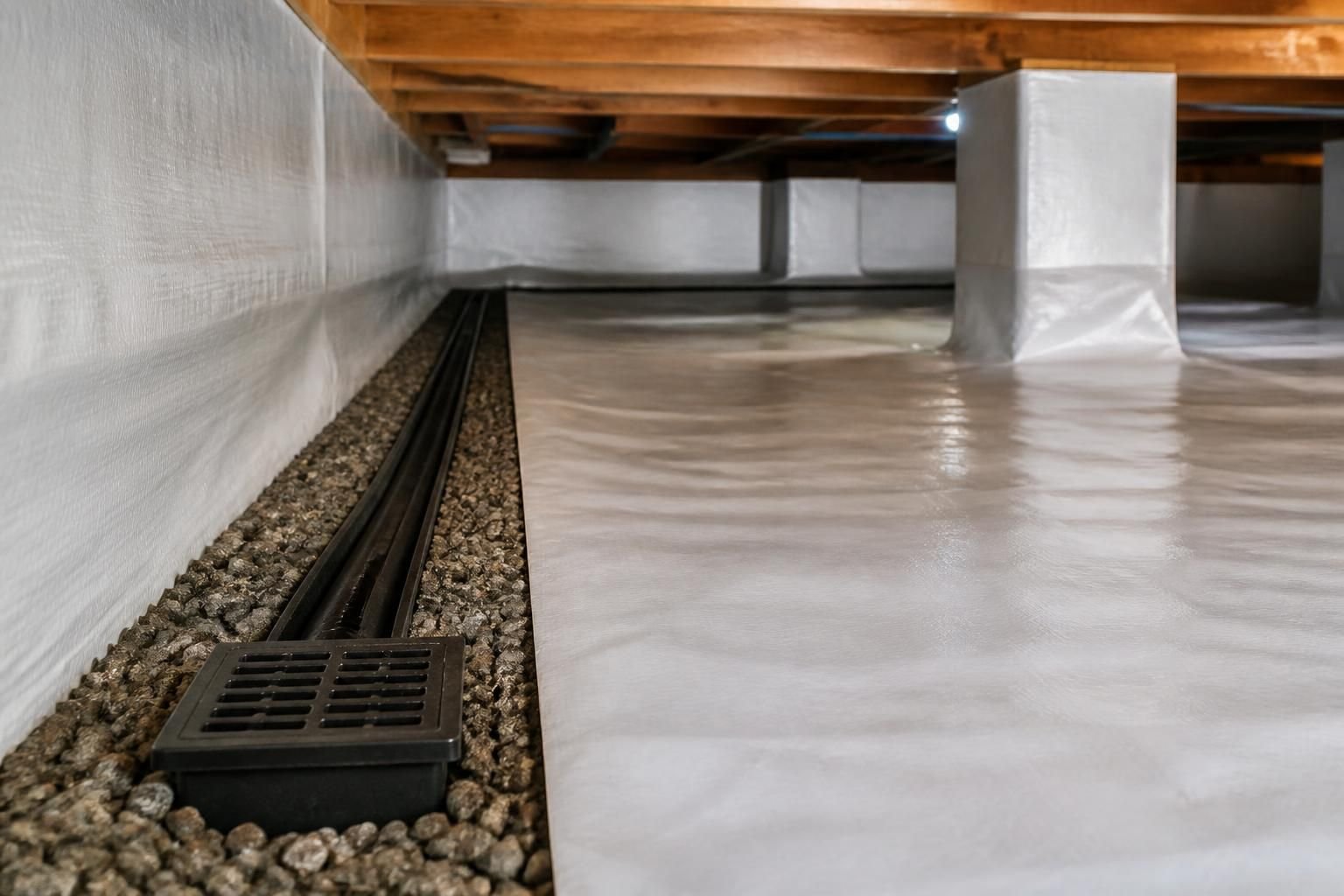
Chesapeake Solid Foundation Repair offers crawl space water removal & drainage in Chesapeake, VA. Standing water under your home is more than a nuisance. It can bring musty odors, damp insulation, soft wood, and floors that start to feel uneven. If you have noticed water collecting under the house, wet soil after rain, or a crawl space that never seems to dry out, the next step is a real inspection and a drainage plan that addresses the source.
Chesapeake Solid Foundation Repair helps homeowners across Chesapeake with crawl space water removal and drainage that is built around the conditions under your home. We look for where water is entering, how it is moving, and what is keeping the space wet, then recommend the right combination of removal, drainage, and moisture control so the problem does not keep coming back.
Crawl space water problems often announce themselves before you see the water itself. A damp smell indoors, warped floors, or a sudden rise in humidity can all point to water sitting below the home.
If any of these sound familiar, it is worth getting the crawl space checked before the moisture spreads further into the structure.
Water in a crawl space usually comes from more than one place. The goal is not just to remove what is already there. It is to understand why the space is collecting moisture so the same problem does not keep returning.
Some crawl spaces collect water because the ground around the home holds moisture and slowly pushes it through openings, seams, or low points under the house. This is common where soils stay wet for long periods.
Rainwater may move toward the foundation and find its way into the crawl space through vents, gaps, or openings along the edges. If the grading around the home sends water toward the structure, the crawl space often becomes the place where that water ends up.
Even when there is no standing water, a crawl space can stay damp from humid air and condensation. That constant moisture can still lead to mold, wood rot, and sagging floors over time.
Chesapeake Solid Foundation Repair starts with a careful look at the crawl space so we can tell whether you are dealing with pooled water, saturated soil, seepage, or a drainage route that is not doing its job. From there, we plan the water removal work around the conditions we find.
Our approach may include:
We identify where the water is entering and where it is collecting, so the solution targets the actual path of moisture.
We clear out the visible water so the crawl space can begin drying and we can inspect the structure underneath.
When water needs a better route out of the crawl space, we address drainage so it does not keep pooling in the same area.
We look at barriers, vapor control, and related moisture control measures when the space needs more than water removal alone.
Every crawl space is different, and the fix should match the source, not a guess.
Once water is removed, drainage has to handle what comes next. A crawl space that keeps receiving water needs a clear path for that moisture to leave the area instead of sitting under the home.
Depending on what we find, drainage work may focus on:
Drainage is not one-size-fits-all. A home with a small seepage problem may need a very different setup than one with repeated standing water and damp structural members.
Water sitting under a home can do more than stain the soil. It can affect the structure above it. The longer moisture remains, the more chance it has to weaken wood, feed mold growth, and make floors feel soft or sloped.
Here is the chain we see most often:
Moisture collects through seepage, runoff, or humidity.
Drying never fully catches up, especially in low areas.
Wood framing, insulation, and other materials begin to show damage.
Musty smells, uneven floors, and visible deterioration become easier to notice.
Dealing with the water early often keeps the repair scope smaller and makes the crawl space easier to restore.
A crawl space inspection should answer real questions, not just point out that it is wet. We look for the source, the path, and the damage already caused by the moisture.
During an inspection, we check for:
Once we understand what is happening, we explain the findings in plain terms and outline the next steps without pressure.
Some crawl spaces need one focused fix. Others need several related services working together. The right plan depends on how the water behaves and what the crawl space has already gone through.
If the space already has standing water, getting it out is the first priority. That lets us see what the crawl space really needs and helps prevent further damage while the rest of the plan is put in place.
Many homes do better with drainage improvements paired with moisture control measures. That combination helps manage both direct water entry and the damp conditions that follow.
When moisture has already affected floor supports or other structural materials, drainage alone is not enough. We can also address related crawl space repair needs so the home is supported again.
Once crawl space water and drainage problems are addressed, homeowners often notice the home feels different. The space below the house is quieter, drier, and less likely to create odors or structural stress.
Common improvements include:
For Chesapeake homes, that kind of moisture control can make a real difference because crawl spaces are such a common part of the local building style.
Because Chesapeake sits low with a high water table, crawl spaces here frequently take on standing water after rain or seasonal groundwater rise, particularly near the Dismal Swamp and tidal creeks. Left alone, that water rots framing and invites mold. We install the drainage, sump systems, and grading needed to move water out and keep it out, matched to how wet a given lot and its water table really are.
A persistent damp smell, floors that feel cool or soft, and humidity that seems higher than it should be can all point to crawl space moisture. A visual look under the home often confirms whether water is present.
Yes. Some crawl spaces have damp soil, hidden seepage, or condensation that does not leave obvious pools. Even without visible standing water, the space can still create mold, rot, and odor problems.
If water appears after rain, drainage is often part of the solution. The key is to find out whether runoff, seepage, or another route is bringing water into the space.
Not always. Removing the water helps right away, but the crawl space may need drainage changes, vapor control, or other moisture management to keep the area from getting wet again.
Yes. Moisture can weaken wood, create sagging, and contribute to uneven floors over time. That is why crawl space water should be addressed before damage spreads.
Yes. Chesapeake Solid Foundation Repair serves homeowners throughout Chesapeake and nearby communities, including Greenbrier, Great Bridge, Western Branch, Deep Creek, South Norfolk, Indian River, Hickory, Grassfield, Pleasant Grove, Butts Station, Edinburgh, and Camelot.
If your crawl space has standing water, damp soil, or signs of recurring moisture, Chesapeake Solid Foundation Repair can help identify the source and map out the right drainage solution. We work with Chesapeake homeowners who want a clear answer and a crawl space that is no longer sitting wet under the house.
Call +17579086395 to schedule an inspection.
Get Started
Share what you are seeing in your home, and we will help identify whether the issue is coming from settlement, moisture, drainage, or crawl space damage.